One month, two events, more ambitious than anything we had done so far with Claude Code Curious. What a July!
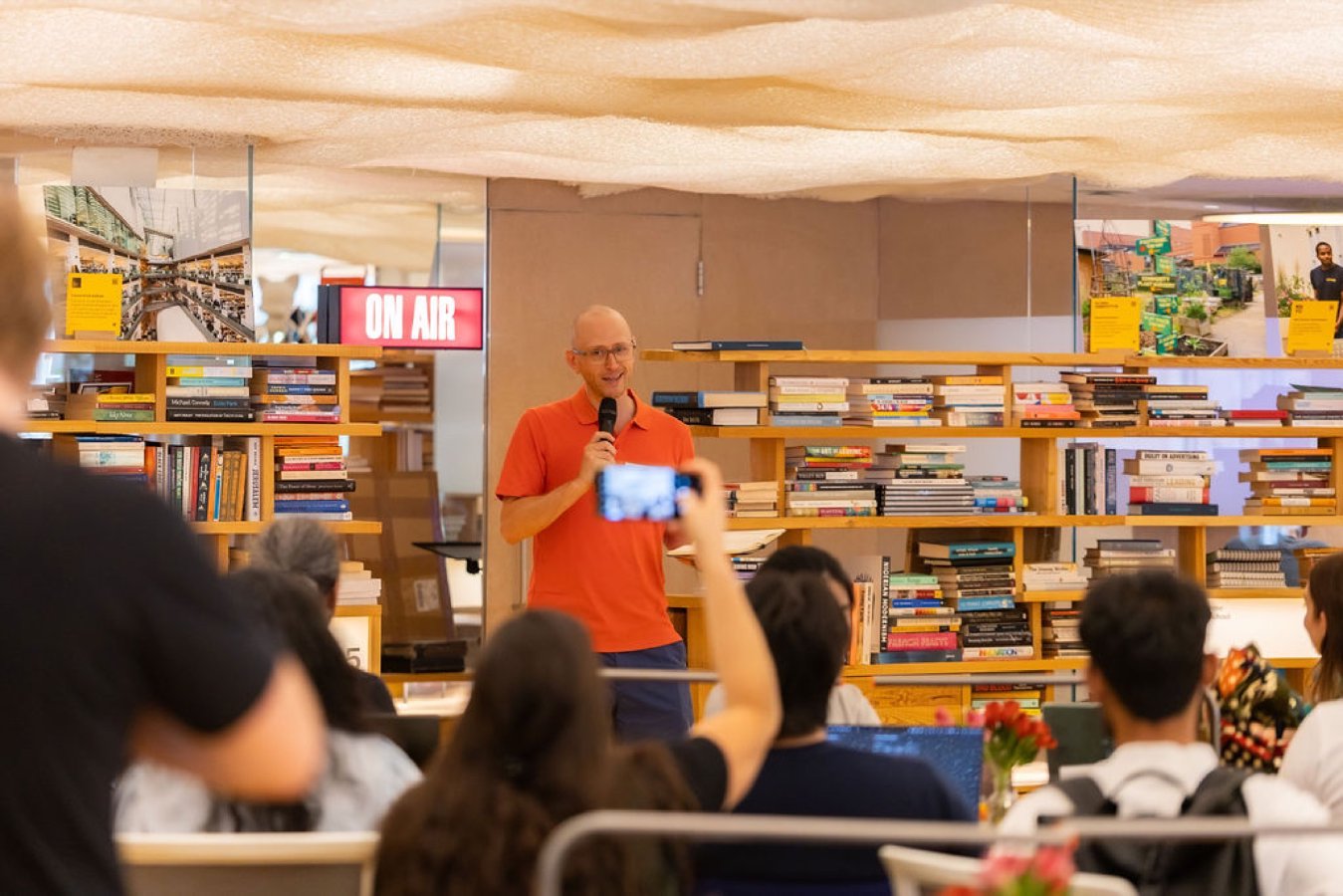
On 30 July, we hosted the second part of Claude Conversations – a hackathon where 70+ people assembled in teams to build things that would ease the transition to our AI-native reality.
The frame had been set two weeks earlier at the first Claude Conversation event, where we asked “what is AI doing to us?” When asked where do we start, they came up with three focus areas:
1. “How can AI make its users better?” A better person, more educated, more informed, more critical. Not just at work, in the world.
2. “How do we make AI accessible for all?” Bring the benefits to non-technical backgrounds, those without computers, younger people or different cognitive needs
3. “How can AI help communities thrive?” Instead of centralising opportunities, how can it expose them locally and match people to what’s needed?
The scene was set, the building began!
The finalists
We asked six teams to demo their builds for the room — four straight presentations and one head-to-head.
Kintsugi — LLM Council Group Chat Started from research showing different LLMs have measurably different worldviews (The Economist ran 25 models through the World Values Survey): “when you ask AI advice, it comes with a hidden opinion that you actually didn’t ask for — and we believe you deserve to see it.”
So: why get advice from one model when you can convene a panel? Their tool imports your WhatsApp history for relationship context, then shows you the optimist’s take, the pragmatist’s take, and — if you want your thinking properly tested — the contrarian’s. Ground News, but for LLMs.
Ohme — Dirty Laundry A browser extension that rates fashion products 0-10 on environmental, labour and animal-welfare impact while you shop, and suggests alternatives — cost-aware ones rather than “buy the £200 ethical version”.
As you choose better, you grow a little personal world of trees and ponds. Aimed squarely at Gen Z fast fashion.
More Biscuits — Hey June An AI companion for elderly or cognitively challenged users, built around one of the team’s own mums (“It’s my actual mum, by the way”). You photograph a letter; it pulls out the dates that matter, flags language that smells like a scam (flagged, never definitive — “this looks like it might be a scam”), and builds context over time.
The clever part is that it’s two-sided: a family member can log in, add the things the letters don’t say — medications, appointments — and see how their person is actually managing. As they put it: “I’m not suggesting this replaces being a child, but we’ve certainly got a companion here that can help with paperwork.”
Team 3C — Prov A platform for preserving artisan craft knowledge, starting with a demo dataset of Andean backstrap loom weaving: 23 artisans, 340 entries. Artisans document their craft through guided questions, video and peer validation; buyers and researchers access it as a data marketplace — but the data never leaves the platform, and royalties flow to the communities it came from.
Then finally, A GRUDGE MATCH: two teams independently built in the same territory, with coincidentally similar team names. So naturally, we pretended there was huge animosity between them and that we had to hold them back from tearing each other to pieces. Maybe you had to be there.
TKB Stack A game that teaches you to spot logical fallacies — ad hominem, strawman, false dilemma — using real examples, with a free-text coaching mode in the works that grades how you’d actually refute one.
They opened their demo cold with a staged row between two teammates about gym habits, then turned to the audience: that was an ad hominem, and here’s how you’d take it apart.
TBC A decision-thinking tool with multiple AI agents of different orientations, and a design choice I liked a lot: it forces you to type your reasoning rather than click the recommended option — “the whole point of making you type it out is that you’re the one who thought about it.”
There’s a confidence slider so the agents know how sure you claim to be, and yes, an escape hatch labelled “think for me”.
I asked both showdown teams the same question — do people want to be right, or feel right? — and TBC’s answer won them the better-users pillar: “I have a hot take on this: it’s how not to be wrong instead. People focus on being right, but there are many ways of being wrong.”
Everyone else who built
Turns out hosting a hackathon is a very different experience to participating – you get to see all the ideas bubbling up and the different projects and teams. There’s no view like it, but I want to share a little of it here.
So here’s the list of everything built on the day to wrap up:
- Serendipity fragments — capture half-formed ideas as they occur, then a weekly Opus pass finds the patterns across them. This one won the unofficial “app I personally want” prize.
- An environment scorer — psychology-based questions that tell you whether your current environment is one you should stay in.
- Hyper-local community matching — at three tiers: your street, your area, your city.
- Grant Scout — a chat interface over UK government grants that synthesises gov.uk sources and drafts the application.
- An NHS letter reader — summarises official letters for elderly users and reads them aloud.
- A coaching assessor — wearable audio from football sessions, LLM-scored reflection for the coach.
- A skills companion — for professional development, built live into their own platform.
- Read Alone — a reading tool for dyslexic and non-native readers that tracks hesitation and pronunciation, with a teacher dashboard.
- Housing transparency — safety, noise, pollution and landlord data in one place; pivoted mid-afternoon towards tenant complaint escalation.
- A career experiment designer — small real-world experiments for career changers, narrowing towards a goal over 6-12 months.
- An RPG companion pet — gamified AI onboarding for non-technical users; a sandbox with a creature in it.
- A UK visa navigator — filters visa options and translates the whole maze into your native language.
- A switch interface — intent-based AAC: two-button navigation with context-aware prompts for users with disabilities.
- Human Arcs — a timeline game for historical perspective (the stock exchange is closer in time to the Aztec empire than to today — that sort of thing).
- Whetstone — a friction layer for your prompts: before answering, it challenges you with a counter-position, so every prompt sharpens you a little.
- Piss Out — a public bathroom map with ratings and rank nicknames for prolific reviewers. Winner of best name, obviously, and the crab hat that goes with it.
- An app to help visualise code — editable and queryable, so non-technical people can see what Claude Code is actually doing.
Wrap up
Did we change the world? Did we build the thing to solve the challenge: what is AI doing to us?
Of course not. It doesn’t happen in a few hours in a room in King’s Cross.
It will be the life’s work of the smartest people in society for decades ahead of us.
But you have to start somewhere. And I believe that by empowering more people than ever to make things and discover their full potential, that is where the answer lies.
The question is so passive. What matters is not what AI does to us. It’s what we do with it.
And obviously, that is up to us.